
It is the question I hear more than any other this fall: should I buy a home now, or wait for mortgage rates to drop? With the 30-year fixed rate at 7.03% as of late September 2026, the highest in more than a year and a half, the temptation to wait is completely understandable. But the honest answer, based on the forecasts and the math, is that waiting only pays off if rates and prices both move in your favor, and most economists expect neither to change dramatically anytime soon. Here is how to think through the decision for your own timeline, your budget, and the Northeast Metro Atlanta market.

Where Rates Actually Stand Right Now
Let us start with the facts. Freddie Mac's Primary Mortgage Market Survey put the average 30-year fixed-rate mortgage at 7.03% for the week ending September 24, 2026, the fifth consecutive weekly increase and the highest reading since early 2025. The climb has been steady and public: 6.66% on August 27, 6.71% on September 3, 6.76% on September 10, 6.95% on September 17, and then 7.03% on September 24. The 15-year fixed rate averaged 6.42%, and some daily measures run even higher, with Zillow's average purchase rate near 7.6% at the end of September.
What is driving the move? The same forces that pushed rates up through the summer: elevated oil prices following renewed conflict in the Middle East, stubborn inflation, and a labor market that has stayed stronger than expected. Mortgage rates track long-term Treasury bond yields, and those yields have climbed as investors price in a Federal Reserve that is more likely to hold rates steady, or even hike, than to cut them soon. A year ago the average 30-year rate was 6.30%. Today it is more than 70 basis points higher, and that difference is real money on any mortgage.
What the Forecasters Actually Predict
The most important thing to understand about the "wait for rates to drop" plan is what the experts are actually forecasting. Fannie Mae sees the 30-year rate averaging about 6.4% through the rest of 2026 and roughly 6.3% in 2027. The Mortgage Bankers Association projects an average of 6.5% for the fourth quarter of 2026 and for 2026, 2027, and 2028 as a whole, a classic "higher for longer" call tied to energy prices and inflation. US News and Money put the range at 6.18% to 6.5% for 2026 and 5.96% to 6.5% for 2027.
In other words, the consensus is not that rates are about to plunge. It is that they will hold in the mid-to-high 6% range, with most major forecasters seeing rates above 6% through at least 2027. And in Bankrate's expert poll for October 1 through 7, 2026, 63% of panelists expected rates to rise over the coming week. Nobody credible is forecasting a return to 3% or 4% mortgages. If your plan is to wait for a rate that is not coming, the wait itself becomes the cost.
The Math Most People Skip: Waiting Only Wins If Two Things Happen
Here is the calculation that rarely makes it into the headlines. For waiting to pay off, two things both need to happen: rates need to fall, and prices need to stay flat or drop. If rates fall a point but prices rise 3% or 4% while you wait, your monthly payment barely changes, and you have paid rent in the meantime.
Let me show you with real numbers. At 7.03%, a $600,000 loan costs about $4,004 per month in principal and interest. Now imagine rates fall to 6.3%, Fannie Mae's 2027 forecast, but the same home costs 4% more by the time you buy, roughly $624,000. The payment would be about $3,862, a savings of roughly $142 a month, while the purchase price would be $24,000 higher. You would wait a year, pay a year of rent, and end up with a slightly lower payment on a meaningfully higher price. The waiting game rarely delivers the dramatic win it promises.
And a smaller rate move is even less compelling. A quarter-point drop on a $600,000 loan saves roughly $100 a month. That is real money, but it is not the life-changing difference people imagine, and it can be captured in other ways, like a seller-paid buydown or lender credits, without waiting at all.
The Rent Check: Waiting Has a Real Cost
Every month you wait, you pay rent, and rents are still climbing, up roughly 4% year over year in much of the country. A rent-versus-buy spreadsheet will often show renting as cheaper on a pure cash-flow basis, especially at today's rates, but that math flips for buyers who stay in a home five years or more, build equity, and lock in a payment that does not rise with the market.
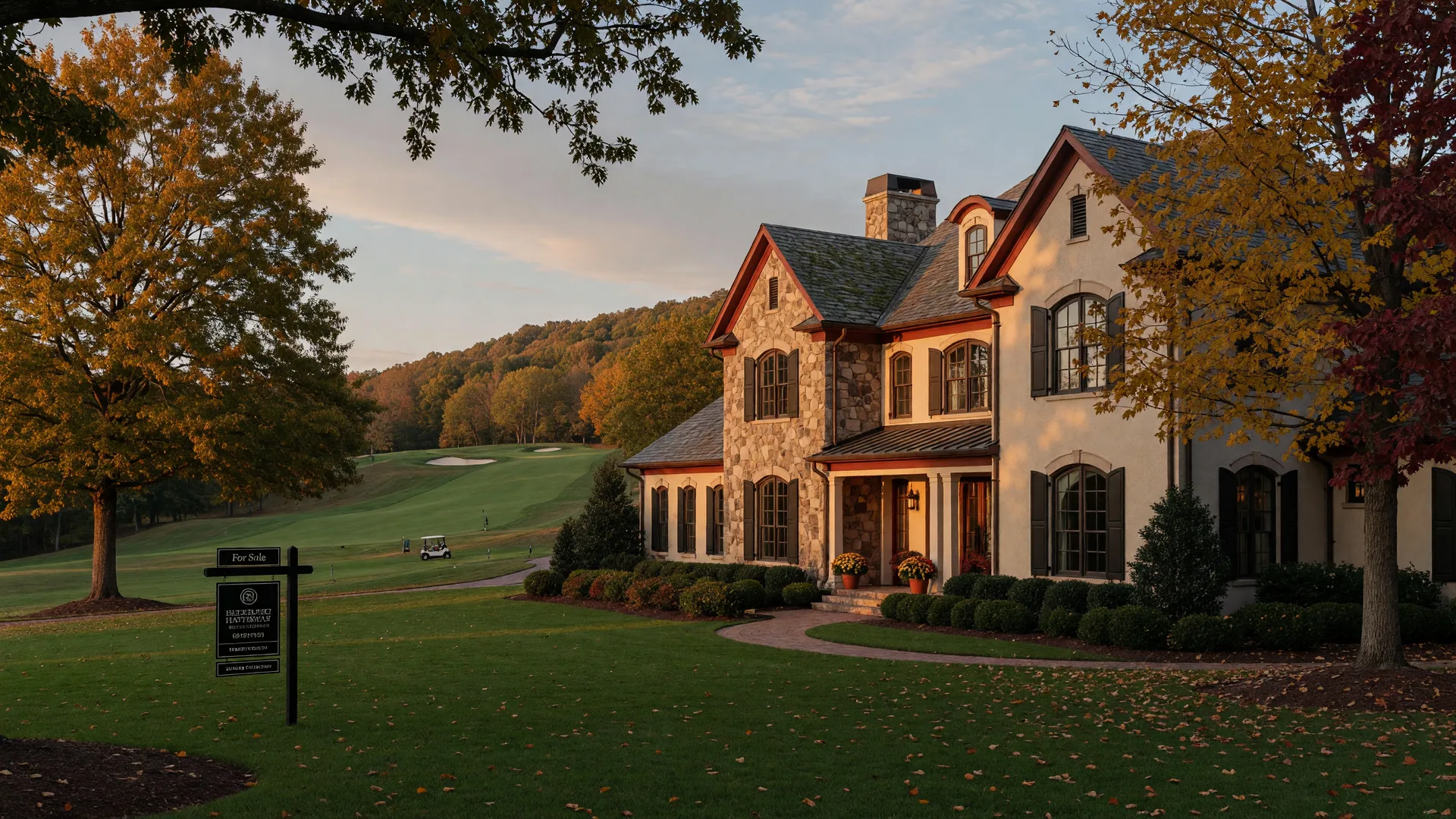
In a community like Chateau Elan, the spreadsheet misses something else entirely. The lifestyle, the golf, the winery, the resort amenities, the security of a gated community, the neighbors who become friends, none of that shows up in a rent comparison. Life is too short for ordinary homes, and the extraordinary ones are not rented, they are bought. If the community itself is the point, waiting on a rate number is a weak reason to delay the life you actually want.
What Waiting Looks Like in This Market
Here is the part that surprises most buyers: this is one of the strongest buyer's markets in years. Inventory across metro Atlanta sits well above pandemic lows, homes in Chateau Elan average 45 to 70 days on market depending on the section, and price reductions of $50,000 to $350,000 have appeared across multiple listings this year. Realtor.com named the week of September 27 through October 3, 2026 the best week to buy a home in 2026, with potential savings near $14,000, demand roughly 30% below its seasonal peak, and prices about 3.5% below their seasonal high. Redfin has described the current market as the strongest for buyers on record, with roughly 58% more sellers than buyers.
Buyers are negotiating price, closing costs, and rate buydowns in ways that were unthinkable two years ago. That leverage exists right now. If rates do fall later, expect more buyers to jump back in, competition to return, and that leverage to shrink. Waiting for a better rate can mean walking into a more crowded market.
How to Protect Yourself Either Way
You do not have to choose between buying today and betting on tomorrow. There are tools that let you do both.
Lock your rate early and hold it. Standard rate locks run 30 to 60 days, and a 45-day lock is typical. If a quarter-point increase would make your payment uncomfortable, lock as soon as you have a contract. You can always shop for a better deal if rates improve before closing.
Ask about a float-down option. For a small fee, usually 0.125% to 0.5% of the loan amount, a float-down lets you capture a lower rate if rates drop after you lock. It is insurance, and in a market where rates swing weekly, it can be worth every penny.
Use seller concessions to buy down the rate. In a market where homes sit 60 days or more, sellers are often willing to contribute to closing costs or fund a temporary buydown. A seller-paid 2-1 buydown can lower your effective rate in the early years, when payments matter most, and it costs you nothing out of pocket.
Plan the refinance. The classic play in a high-rate market is "buy now, refinance later." Lock today's rate, build equity while you live in the home, and refinance when rates eventually settle into the mid-5% or 6% range. You capture the home you want now and the lower payment later, without giving up either.
A Simple Decision Framework
After nearly 20 years in this business, I have learned that the rate headlines are the least reliable part of the decision. Your own numbers matter more. Here is how I help clients think it through.
Buy now if you are financially ready. You have a solid down payment, a stable income, an emergency fund, and a payment that fits comfortably in your budget at today's rate. If a 7% mortgage works for you, the market conditions right now, the selection, the leverage, the motivated sellers, are in your favor.
Buy now if you plan to stay five years or more. You will ride out any near-term price softness and build equity while rents keep rising. The longer your horizon, the less today's rate matters.
Buy now if you have found the right home. The right home in the right community is not interchangeable with the next one. In a luxury market like Chateau Elan, the specific home, the view, the lot, the section, matters enormously. Passing on the right home to save a fraction of a point on the rate is usually a mistake.
Wait only if your own situation says wait. If you are not financially ready, if you will move again in under five years, or if your income is uncertain, then waiting is sound, but wait for your readiness, not for a rate number. The worst reason to wait is a headline, when the forecasters themselves are telling you the number you are waiting for is not coming soon.
Your Buy Now or Wait Checklist
The Bottom Line for Chateau Elan and Northeast Metro Atlanta
Rates at 7% are not easy, and I will not pretend otherwise. But the decision to buy a home was never really about a single number on a Thursday morning survey. It is about your life, your timeline, and the community you want to live in. In Chateau Elan, buyers right now have selection, negotiating power, and motivated sellers, and the lifestyle, the golf, the resort, the security, is not waiting on the Fed.
The forecasters see rates holding above 6% through 2027. Prices in Northeast Metro Atlanta have proven resilient even as inventory has grown. If you are financially ready and planning to stay, the math says waiting is more likely to cost you than save you. And if you are not ready, that is fine, but make the decision on your own numbers, not on a rate headline.
From tee times to closing times, the right strategy starts with a clear-eyed look at your situation. If you have been going back and forth on the buy now or wait question, I would love to run the real numbers with you, for the homes you are actually considering, at the rates you can actually get. That is where the answer lives, and it is different for every buyer.