

Whole-home battery backup is one of the fastest-growing home upgrades in the country right now, and Georgia is at the center of the conversation. Listing mentions of home batteries are up 40% year over year, searches for energy resilience are climbing even faster, and a statewide state of emergency declared on October 8, 2026 as Hurricane Isaias approached reminded every homeowner in Northeast Metro Atlanta how quickly the lights can go out. Here is what battery backup costs in 2026, how to size one for a home like those in Chateau Elan, and why power resilience is becoming a genuine selling point in the luxury market.
Why Energy Resilience Is Suddenly a Headline Topic
Georgia has a particular relationship with storms: they do not hit every year, but when they do, they hit hard. Hurricane Helene, which swept through the state in September 2024, knocked out power to nearly two million Georgia Power customers and became the most destructive storm in the utility's 140-year history. Ninety-five percent of customers were restored within eight days, but for the homes in the other five percent, and for anyone who lost food, medication, or days of work, the lesson stuck.
Georgia Power has responded with a $1.3 billion, three-year Grid Investment Program focused on smart-grid technology, stronger infrastructure, and undergrounding lines. That is real progress, and it does not change the fundamental math: when a hurricane or a severe thunderstorm takes down a feeder line, restoration work is measured in days, not hours. Homeowners who want certainty are increasingly buying it themselves.
The trend data confirms it. Zillow's home trend research shows listing mentions of whole-home batteries up 40% year over year, zero-energy-ready homes up 70%, and EV charging infrastructure up 25%. Buyers are searching for resilience the way they once searched for granite countertops: as a feature that signals a home is ready for the future.
What a Whole-Home Battery Actually Costs in 2026
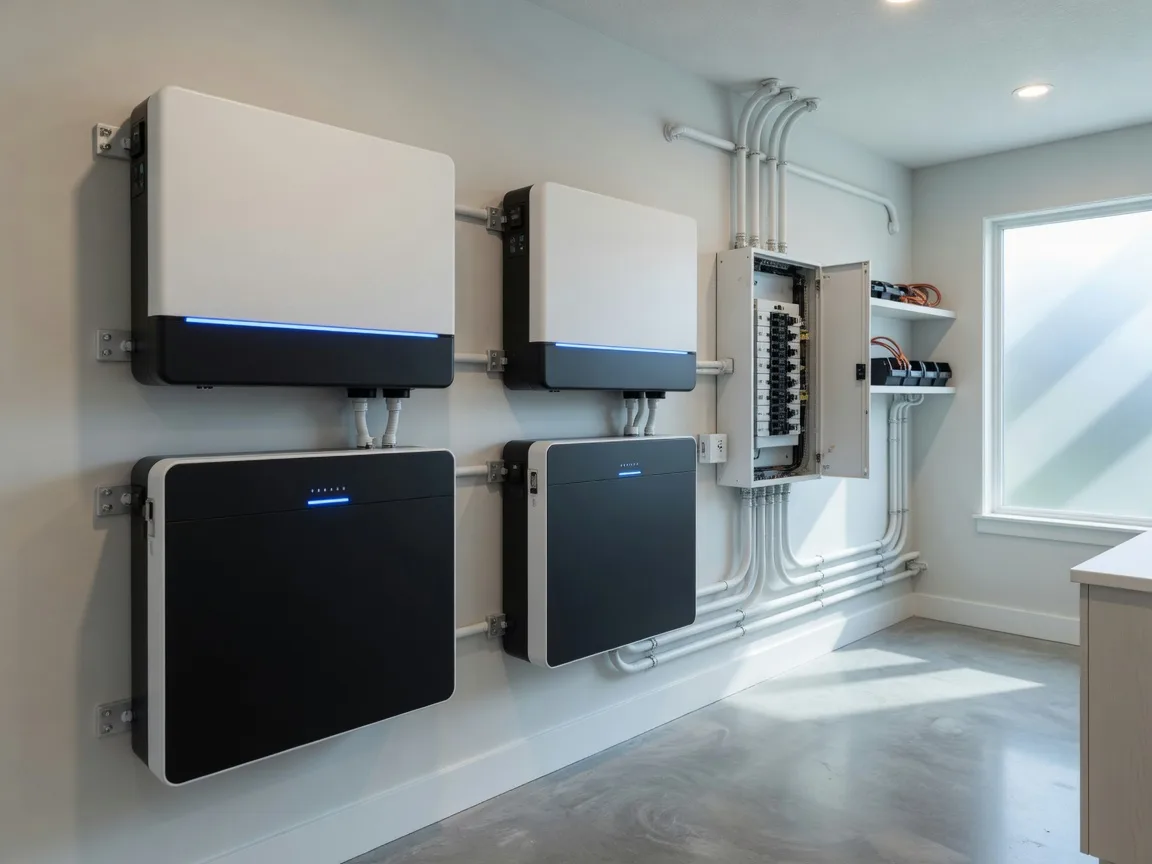
Prices have come down steadily, but a battery is still a serious investment. Most fully installed systems run $10,000 to $30,000, or roughly $800 to $1,500 per kilowatt-hour of storage. A single Tesla Powerwall 3, with 13.5 kilowatt-hours of usable capacity and 11.5 kilowatts of continuous output, typically lands between $13,000 and $16,500 installed.
Think of it in two tiers. Essential-load backup, usually 10 to 15 kilowatt-hours, keeps the refrigerator, lights, Wi-Fi, and medical devices running through a multi-day outage, and typically runs $12,000 to $20,000 installed. Whole-home backup, 27 to 40 or more kilowatt-hours, can carry a larger home through extended outages and often pairs with solar, and that tier runs $20,000 to $40,000 and up. For a luxury home with a pool pump, a well, or extensive HVAC, sizing drifts toward the top of that range.
How to Size a Battery for Your Home
The rule of thumb is simple: size from your critical loads, not from the square footage of your house. A typical household's critical loads, the refrigerator, a few lights, Wi-Fi, and medical devices, run about 3 to 6 kilowatt-hours per day. That means a 10 to 20 kilowatt-hour battery covers one to two days of essential backup, and a single Powerwall 3 can stretch four days or more on critical loads alone.
For whole-home coverage, the math changes. A 2,000-square-foot home using roughly 30 kilowatt-hours per day needs 30 or more kilowatt-hours of storage for multi-day outages, which means two to three batteries. Add electric heat, a pool pump, or a well pump, and you are planning for the top of the range. The right approach is to have an installer model your actual usage and your actual outage history before you buy.
The Georgia Power Math: Rates, Net Metering, and Incentives
Georgia's electricity is relatively affordable, which changes the payback math. Residential rates average roughly 13.5 to 14.1 cents per kilowatt-hour, below the national average near 17 cents. That is good news for monthly bills and less helpful for solar payback, because Georgia Power does not offer one-to-one net metering. Excess solar is credited at about 7.2 cents per kilowatt-hour, well below the retail rate.
That is exactly why batteries pair so well with solar in Georgia. Instead of selling your excess daytime solar to the grid at the low export rate, a battery stores it and lets you use it at night at retail value. The battery effectively captures the spread between the two rates, and it is there when the grid is not.
Georgia Power is also moving on storage itself. Its Solar Plus Storage Pilot, approved in the company's 2025 Integrated Resource Plan, is expected to launch and would pay participating customers for battery capacity that supports the grid during high-demand periods. EV owners can stack a residential charger rebate of $150 to $200 for installations completed in 2026.
One caution on tax credits: the federal 30% Residential Clean Energy Credit that once covered standalone battery systems ended on December 31, 2025, and the rules for 2026 depend on your exact system and how it is financed. Georgia's Home Electrification and Appliance Rebates program, run through GEFA, is scheduled to reopen in October 2026 with limited measures such as electrical panel upgrades. The incentive picture changes quickly, so verify the current rules with a qualified tax professional before you commit.
Battery Backup or Generator: Which Should You Choose?
Most homeowners considering a battery ask the same question: why not just buy a generator? Generators cost less upfront, and a whole-home standby generator can run a large house for days on propane or natural gas. But they need fuel, they need annual maintenance, they make noise, and they run on combustion in your yard.
Batteries are silent, need no fuel, and never run out as long as the sun comes back, especially when paired with solar. They last 10 to 15 years, with most quality units warrantied for a decade at 70% capacity retention. The trade-off is upfront price and the hard ceiling of stored energy: a battery is a finite reservoir, while a generator keeps producing as long as fuel arrives. Many luxury homeowners in Northeast Metro Atlanta choose both, a generator for extended outages and a battery for the quiet, automatic, everyday resilience.
Is Power Resilience a Good Investment for Home Value?
This is where the conversation gets interesting for buyers and sellers. Resilience features do not replace price per square foot or location in an appraisal, but they are becoming a differentiator, especially in luxury communities where buyers are often all-cash and less rate-sensitive. A home that can keep its lights on, its security system armed, and its wine cellar stable through a storm reads differently than the house next door that cannot.
For sellers, a documented battery and solar system is a marketing story with receipts: the system's capacity, its age, and its warranty transfer cleanly. For buyers, it is a line item you do not have to add after closing. In a market where homes sit longer and buyers negotiate harder, the homes that stand out are the ones that answer questions before they are asked.
What This Means for Chateau Elan Buyers and Sellers
Chateau Elan sits in a part of Georgia that sees its share of severe weather, and its residents are exactly the homeowners who value preparedness: gated communities, larger homes, wine collections, home offices, and security systems all depend on power. The community's tree-lined fairways are beautiful, and mature trees are also the most common cause of storm outages.
My read, after nearly 20 years in this market, is that energy resilience is moving from a niche upgrade to an expected feature in the luxury tier, the way whole-home generators became standard in upscale neighborhoods a generation ago. If you are selling, a battery system is worth featuring in your marketing. If you are buying, ask about the electrical panel, the age of the roof, and whether the home is set up for solar and storage, because retrofitting after closing costs more.
Your 2026 Power Resilience Checklist
The Bottom Line
Whole-home battery backup is one of the hottest home trends of 2026 for a very practical reason: it turns the scariest part of Georgia living, the days after a storm, into a manageable inconvenience. Prices range from about $12,000 for essential-load backup to $40,000 and up for whole-home coverage, batteries last a decade or more, and the pairing with solar makes the economics better in Georgia than the export rate alone suggests.
Whether a battery is worth it for you depends on your home, your outage history, and your budget, and that is a conversation worth having with an installer and with a real estate professional who knows what buyers in this community actually value. From tee times to closing times, I help homeowners make decisions that protect both their lifestyle and their investment.